L’article presenta la fàcies de l’Empordanès i proposa diversos estudis metodològics per investigar els seus lligams amb el grup Chassey del Rosselló. En la primera part, es presenta una selecció de jaciments excavats al Cap de Creus i la metodologia aplicable a cadascun. La segona part exposarà diverses hipòtesis sobre la influència, la mobilitat i les rutes d’intercanvi entre aquests dos grups situats a banda i banda dels Pirineus, basades en els resultats dels estudis metodològics proposats.
Context
El neolític mitjà és un període que comprèn del V mil·lenni aC fins al III mil·lenni aC i que es caracteritza per diversos factors: l’explotació de matèries primeres especialitzades com la variscita; l’intercanvi d’aquestes matèries primeres amb altres matèries considerades com elements de prestigi com el sílex melat, l’obsidiana o les destrals de roques alpines, naixement de les primeres jerarquies socials que reben aquests béns de prestigi i la consolidació d’una base econòmica agropecuària (Terradas & Gibaja, 2002). Hi ha una territorialització basada en diferents models socioeconòmics, diferències en el món funerari i ecosistemes explotats que fan variar l’economia dels diversos territoris (Terradas & Gibaja, 2002). Aquesta territorialització genera tres fàcies identificables: El Vallesià, el Solsonià i l’Empordanès.
Aquest treball es basa en l’Empordanès. Aquest grup se situa a la zona del Cap de Creus, a l’Alt Empordà. El seu origen es remunta al grup Montboló del neolític mitjà inicial (3600-3400 a.C) (Tarrús, 1987). Es caracteritza per hàbitats al aire lliure. En el món funerari d’aquest grup, trobem dos tipus d’enterrament: El primer grup documentat són les tombes en fossa, com els jaciments de La Bassa o la Fonteta (Tarrús et al., 2016). El segon grup documentat són estructures megalítiques amb corredor, que s’originen a la Serra de l’Albera, que en són els més antics, i el Cap de Creus en IV mil·lenni aC i que s’estén per les zones circumdants més planeres del actual Alt Empordà i el Rosselló en el III mil·lenni aC. (Tarrús, 1987). Aquestes estructures megalítiques les trobem entre la plana i ~400 m.s.n.m, propers als assentaments. (Tarrús, 1987).
Mentre que al Llenguadoc-Rosselló s’hi troba la cultura Chassey, originada al VI mil·lenni aC l’actual Provença (Gassin et al., 2007), aquesta es va estendre ràpidament pel sud de França entre el V-IV mil·lenni aC, formant part de les rutes d’intercanvi que s’originen arreu d’Europa (Gassin et al., 2007). També té molta influència en l’Empordanès i que en aquest trobem diversos elements típics del Chassey, com els hàbitats (Tarrús et al., 2016). De les primeres estructures megalítiques del Chassey que es documenten al Rosselló són a la Serra de l’Albera al IV mil·lenni (Tarrús, 1987). La Serra de l’Albera separa l’Alt Empordà amb el Rosselló i també trobem el contacte del Chassey amb l’Empordanès. Aquests dos grups són tan semblants que Josep Tarrús defineix l’Empordanès en l’article Ca n’Isach (Palau-savereda), un poblado neolítico (V-IV milenio a.C.) en la zona dolménica del Alt Empordà com “Chassey del Empordà” (Tarrús et al., 2016)
Metodologia
La metodologia proposada en aquesta proposta d’estudi són l’anàlisi ceràmic, l’anàlisi d’estronci, l’anàlisi arquitectònic i un estudi arqueomètric per proposar diversos resultats que puguin respondre a l’origen d’aquest grup de l’Empordanès.
Estudis ceràmics poden ser molt variats. L’anàlisi de la manufactura ens aporta el mètode de fabricació i per tant la tecnologia del grup que la fabrica (Baldellou & Ramón, 1995). També es poden analitzar, les tipologies ceràmiques (Baldellou & Ramón, 1995), que ens indiquen l’ús de la ceràmica i diferenciant-les amb altres; i la decoració i els acabats, que marquen possibles implicacions funcionals, socials, rituals i d’influència (Baldellou & Ramón, 1995).
Estudi de isòtops d’estronci en les restes humanes, permetent veure la mobilitat del grup. A partir de la anàlisis d’estronci dels osssos ens indicarà els nivells d’estronci del lloc on s’han inhumat i l’anàlisis d’estronci de l’esmalt dentari ens indicarà diversos nivells d’estronci que l’individu consumia a partir dels diversos aliments i que li queden com a testimoni a les dents. Es contrasten i es veu si l’estronci és igual (l’individu no s’ha desplaçat) o si l’estronci és diferent (l’individu s’ha desplaçat) (comunicació oral, Parque, 2023).
Estudi arquitectònic, que ens veiem la construcció dels habitatges i les seves semblances amb els altres grups per determinar diversos factors: la influència d’un grup sobre un altre, la colonització del territori d’un grup exterior al grup local, la aculturació d’elements, l’intercanvi d’idees en les xarxes de comerç…
Estudi arqueomètric té moltes utilitats en el món de l’arqueologia. En el cas d’aquesta proposta de treball, l’arqueometria ens serviria per establir una cronologia i la procedència dels materials arqueològics.
Jaciments
Els jaciments escollits per la realització d’aquest treball són excavacions recents. Ja que permeten que s’hagi pogut conservar els màxims elements in situ i que no han estat alterats en anys posteriors, permetent aconseguir la màxima informació possible del grup Empordanès.
El primer jaciment escollit és el Dolmen dels Pardals. Descobert el 1999, es van realitzar diverses excavacions en el 2003, 2004 i 2006 (Carreras & Tarrús, 2016). Es va documentar un sepulcre de corredor amb cambra subcircular i túmul (Carreras & Tarrús, 2016), igual que els sepulcres Chassey que trobem en la regió de Llenguadoc-Rosselló (Bec Drelon, 2015). Els laterals d’aquest sepulcre son grans lloses de granit i la capçalera està formada per 5 lloses, que s’han rebaixat i formen un semicercle (Pubill & Trias, 2007). L’entrada del corredor són dues lloses de calcària, formant el forat d’entrada (Pubill & Trias, 2007). Dins d’aquest sepulcre es va documentar restes de 3 individus; 2 infantils i 1 adult, i un ric aixovar (Carreras & Tarrús, 2016). S’hi ha trobat fragments ceràmics, útils de sílex i denes de collaret discoïdals d’esteatita (Carreras & Tarrús, 2016). Aquestes troballes ens apropen a una cronologia del neolític mitjà, entorn el IV mil·lenni; tot i que es va continuar el seu ús fins a finals de l’edat del bronze (Carreras & Tarrús, 2016). Seria molt interessant aplicar estudis ceràmics als fragments recollits, estudis de isòtops d’estronci per les restes dels individus i també estudis arquitectònics, car per la cronologia del IV mil·lenni, seria un dels més antics de la zona.
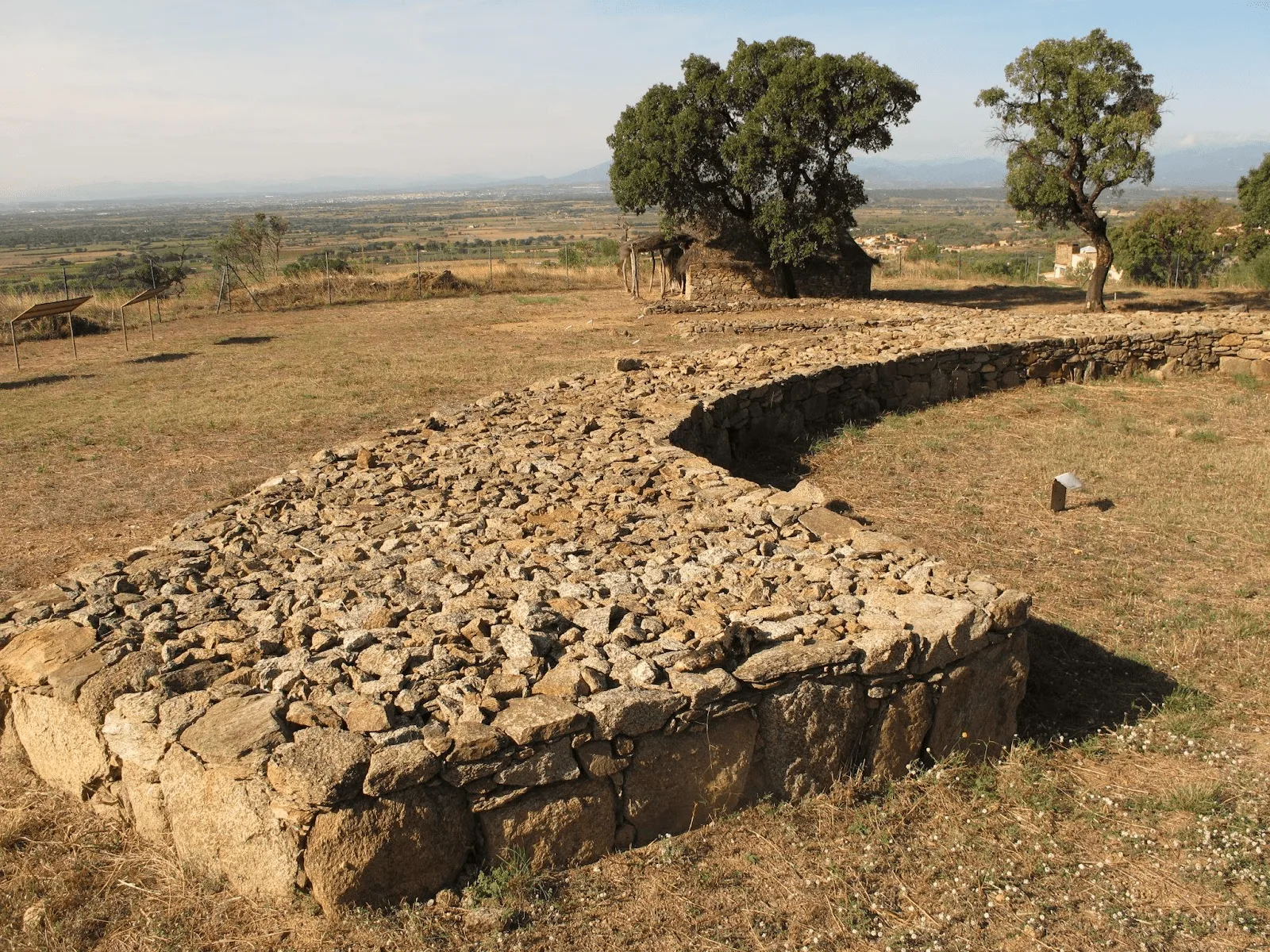
El segon jaciment escollit és el Llit de la Generala (fig 1.). Descobert el 1912, es van realitzar diverses excavacions en el 1924 i el 2001 (Tarrús et al, 2004). L’estructura megalítica és un sepulcre de corredor amb cambra subcircular i amb túmul (Tarrús et al., 2004). En l’excavació del 1924, duta a terme per Pere Bosch-Gimpera i Lluis Pericot, es va recollir fragments de ceràmica grollera (Tarrús et al,2004). Priori a l’excavació del 2001, l’estructura consta amb molt mal estat (Tarrús et al., 2004). En la intervenció no es van recuperar restes òssies, però si es va recuperar restes ceràmiques i una fulla de sílex (Tarrús et al., 2004). Posterior a l’excavació, aquest megàlit es va restaurar (Tarrús et al., 2004). En aquest cas es poden aplicar els estudis ceràmics per les peces i també estudis arqueomètrics, sobretot en la fulla de sílex. Seria més cautelar no aplicar estudis arquitectònics, car en ser restaurada no és 100% original.
Figura. 1. Fotografia del Dolmen del Llit de la Generala. Font: Ajuntament de Roses.
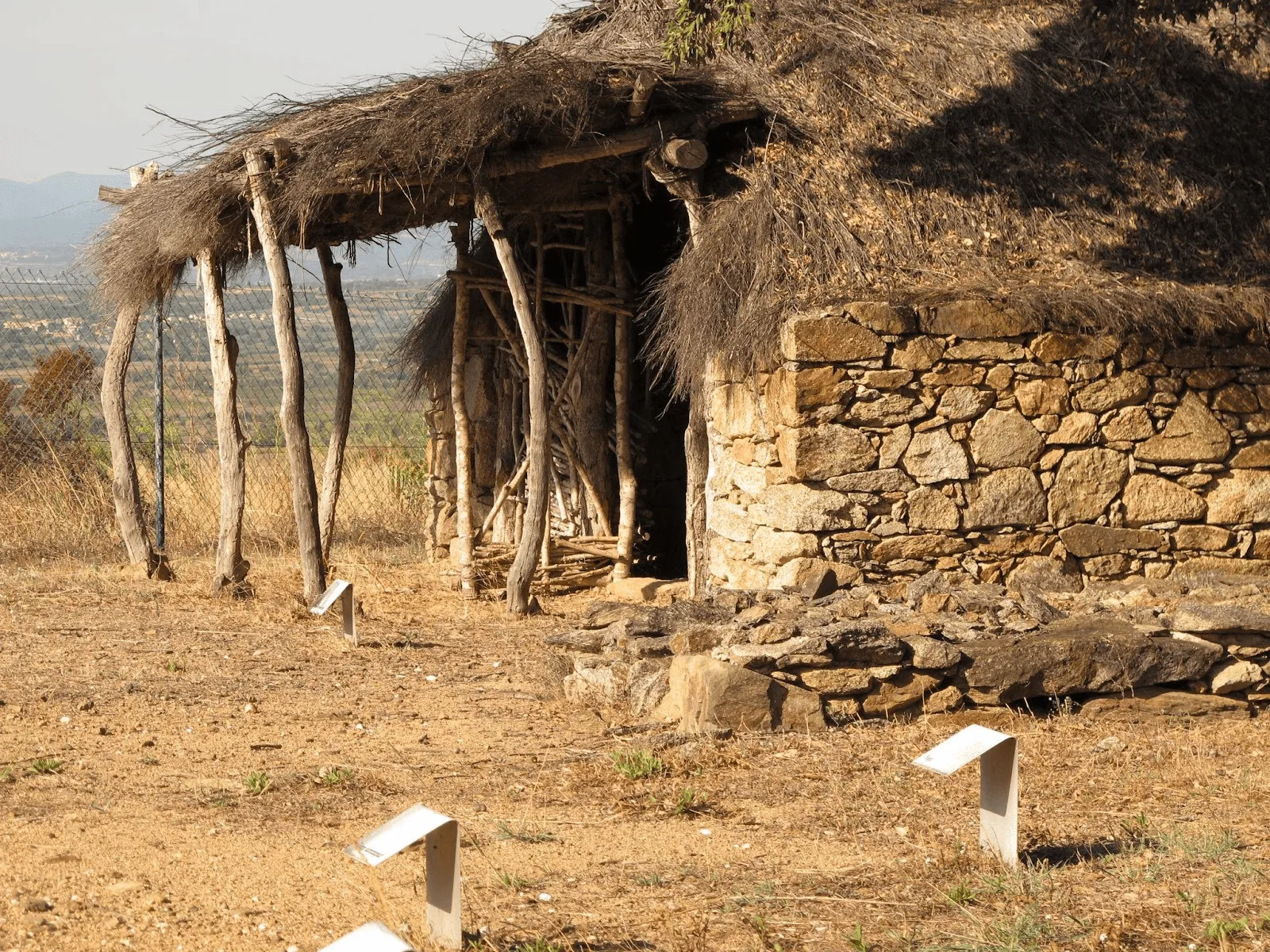
El tercer jaciment escollit és el poblat de Ca’n Isach (fig.2). Descobert el 1987, es van realitzar diverses excavacions entre el 1987 i 1994 i entre el 2001 i 2003 (Tarrús et al., 2016). Durant les excavacions es va documentar un poblat amb diverses fases d’ocupació. Les fases són des del neolític mitjà inicial, entorn el 4600 aC. fins l’edat del bronze, del s.VIII aC (Tarrús et al., 2016). En el cas d’aquest article, ens centrem en el neolític mitjà ple, del 3900 aC fins el 3400 aC. El poblat té 4 cabanes en forma de U documentades i estructures negatives, com sitges o forats de pal (Tarrús et al., 2016). En quant a cultura material, es van trobar vasos ceràmics a mà amb decoració estil Chassey, útils de sílex, sílex melat, i útils de pedra polimentada (Tarrús et al., 2016). Aquest assentament és un unicum, perquè és l’únic assentament del neolític mitjà excavat en la seva totalitat a Catalunya i també és l’exemple de que l’Empordanès tenia poblats al aire lliure (Tarrús et al., 2016). En aquest assentament es poden realitzar tots els estudis metodològics que es plantegen en aquest article, a excepció del estudi de isòtops d’estronci. Es poden realitzar estudis ceràmics per les ceràmiques, per saber-ne l’origen; estudis arquitectònics a les cabanes, i estudis arqueomètrics en les restes inorgàniques com els útils de sílex.
Figura 2. Fotografies del Poblat de Ca’n Isach. Font: Ajuntament de Palau-savareda. Licencia: Ajuntament de Palau-savareda
Aquest article presenta la fàcies de l’Empordanès del neolític mitjà i la cultura Chassey destacant la semblança en la construcció megalítica entre ambdós costats del Pirineu. En l’article es proposen diverses metodologies d’estudi per interpretar la relació entre aquests grups: una relació estreta, puntual, o si el grup Chassey es va desplaçar i establir a l’Empordà. Es presenten tres jaciments de la Serra de l’Albera-Cap de Creus (dues estructures funeràries megalítiques i un poblat) i les seves troballes i es plantegen diverses metodologies per ser aplicades.L’aplicació d’aquestes metodologies a les troballes podria aclarir si la fàcies empordanesa és un grup independent amb influència Chassey o una extensió del mateix grup, i mostrar l’impacte dels intercanvis del neolític mitjà a l’oest d’Europa a l’Empordà, incloent-hi possibles influències d’altres grups com el Vallesià.
Bibliografia
Baldellou, V & Ramón, N. (1995). Estudio de los materiales cerámicos neolíticos del conjunto de Olvena, Bolskan, 12, 105-169
Bec Drelon, N. (2015). Megalithic building techniques in the Languedoc region of southern France. A Laporte, L & Scarre, C. (Eds.) The Megalithic Architectures of Europe (pp.31-38). Oxford: Oxbow books.
Carreras, E. & Tarrús, J. (2016). Nous monuments megalítics a l’Alt Empordà i al Rosselló entre 1999-2015, Cypsela, 20, 25-61.
Gassin, B. Lea, V. Astruc L. & Linton, J. (2007). Lithic Management in the Chassey Culture Neolithic. Human Evolution, 2009, 25 (1-2)
Parque, Ó. (24 de Novembre de 2023). ¿De dónde vienen? Determinando la movilidad en restos esqueléticos humanos y animales en la Prehistoria. Seminari de l’assignatura de Prehistòria de la Península Ibèrica, curs 2023-2024, Universitat de Barcelona, Barcelona, Espanya.
Tarrús, J.; Carreras, E.; Custoja, A. & Santamaria, P. (2004). L’excavació i restauració del dolmen del llit de la Generala (Roses, Alt Empordà), Cypsela, 15, 197-208.
Tarrús, J.; Aliaga, S.; Chinchilla, J. & Mercadal, O. (2016). Ca n’Isach (Palau-savereda), un poblado neolítico (V-IV milenio a.C.) en la zona dolménica del Alt Empordà. A Bonet, H. Del neolític a l’edat del bronze en el Mediterrani occidental. Estudis en homenatge a Bernat Martí Oliver (pp. 249-256). València: Diputació Provincial de València.
Tarrús, J. (1987). El megalitisme de l’Alt Empordà (Girona): els constructors de dòlmens entre el Neolític Mitjà i el Calcolític a l’Albera, Serra de Roda i Cap de Creus. Cota zero: revista d’arqueologia i ciència, 36-54.
Tarrús, J. (2021). Megalithism in Catalonia: A brief overview. Catalan Historical Review, 14, 9-20.
Terradas, X & Gibaja, J.F. (2002). La gestión social del sílex melado durante el neolítico medio en el nordeste de la península ibérica. Trabajos de prehistoria, 59 (1), 29-48.
Pubill, A., & i Trias, A. (2007). L’apropiació del paisatge a través del ritual de la mort: de la inhumació a la incineració. L’exemple del dolmen de Pardals (Darnius). Annals de l’Institut d’Estudis Empordanesos, 197-203.
This translation was generated automatically using qwen2.5:14b-instruct and has not been reviewed by a human editor. It may contain errors, omissions or awkward phrasing — for the authoritative version, please read the original in Spanish. Found a mistake? Let us know at info@arqueotimes.es.
The article presents the facies of the Empordà and proposes various methodological studies to investigate its links with the Chassey group of Roussillon. In the first part, a selection of excavated sites in Cap de Creus is presented along with applicable methodologies for each. The second part will present several hypotheses about the influence, mobility, and exchange routes between these two groups situated on either side of the Pyrenees, based on the results of proposed methodological studies.
Context
The Middle Neolithic is a period that spans from 5000 BCE to 3000 BCE and is characterized by various factors: the exploitation of specialized raw materials such as variscite; the exchange of these raw materials with other prestige elements like melanese flint, obsidian, or alpine rock flakes; the emergence of early social hierarchies that receive these prestigious goods and the consolidation of an agrarian economic base (Terradas & Gibaja, 2002). There is a territorialization based on different socio-economic models, differences in funerary worlds, and exploited ecosystems that vary the economy of various territories (Terradas & Gibaja, 2002). This territorialization generates three identifiable facies: Vallesian, Solsonian, and Empordanese.
This work is based on the Empordanese. This group is located in the Cap de Creus area of Alt Empordà. Its origin dates back to the Montbolo group of early Middle Neolithic (3600-3400 BCE) (Tarrús, 1987). It is characterized by open-air habitats. In the funerary world of this group, we find two types of burial: The first documented group are pit graves, such as the sites of La Bassa or Fonteta (Tarrús et al., 2016). The second documented group are megalithic structures with a corridor, which originate in the Serra d'Albera, and are the oldest ones, and in Cap de Creus around 4th millennium BCE and spread to the more level areas of current Alt Empordà and Roussillon by the 3rd millennium BCE (Tarrús, 1987). These megalithic structures can be found between the plain and ~400 m above sea level, near settlements. (Tarrús, 1987).
While in Languedoc-Roussillon, we find the Chassey culture, originating around 6th millennium BCE in present-day Provence (Gassin et al., 2007), this culture quickly spread across southern France between the 5th and 4th millennia BCE as part of exchange routes that originated throughout Europe (Gassin et al., 2007). It also had a significant influence on Empordanese, where we find various typical elements of Chassey such as settlements (Tarrús et al., 2016). Among the earliest megalithic structures of Chassey documented in Roussillon are those in Serra d'Albera around the 4th millennium BCE (Tarrús, 1987). The Serra d'Albera separates Alt Empordà from Roussillon and we also find the contact between Chassey and Empordanese. These two groups are so similar that Josep Tarrús defines Empordanese in his article Ca n’Isach (Palau-savereda), a Neolithic settlement (5th-4th millennium BCE) in the dolmenic zone of Alt Empordà as “Chassey of Empordà” (Tarrús et al., 2016)
Methodology
The methodology proposed in this study proposal includes ceramic analysis, strontium isotope analysis, architectural study, and an archaeometric study to propose various results that can answer the origin of this Empordanese group.
Ceramic studies can be quite varied. The analysis of manufacture provides the method of production and thus the technology of the group that produces it (Baldellou & Ramón, 1995). Also, ceramic types can be analyzed (Baldellou & Ramón, 1995), indicating the use of ceramics and distinguishing them from others; and decoration and finishes, which mark possible functional, social, ritual, and influence implications (Baldellou & Ramón, 1995).
Strontium isotope study in human remains allows us to see the mobility of the group. From strontium analysis of bones, it will indicate the levels of strontium at the place where they were buried and strontium analysis of dental enamel will indicate various levels of strontium that the individual consumed from different foods and which remain as testimony in their teeth. They are compared and seen if the strontium is equal (the individual did not move) or if the strontium is different (the individual moved) (oral communication, Parque, 2023).
Architectural study, which allows us to see the construction of the settlements and their similarities with other groups to determine various factors: influence of one group over another, colonization of territory by an external group to the local group, acculturation of elements, exchange of ideas in trade networks...
Archaeometric study has many uses in archaeology. In this case of this work proposal, archaeometry would serve to establish a chronology and the provenance of archaeological materials.
Sites
The sites chosen for the realization of this work are recent excavations. Since they allow the maximum elements in situ to be preserved and not altered in subsequent years, allowing to obtain the maximum possible information about the Empordanese group.
The first site selected is the Dolmen dels Pardals. Discovered in 1999, several excavations were carried out in 2003, 2004 and 2006 (Carreras & Tarrús, 2016). A corridor tomb with a subcircular chamber and tumulus was documented (Carreras & Tarrús, 2016), similar to the Chassey tombs found in the Languedoc-Roussillon region (Bec Drelon, 2015). The sides of this tomb are large granite slabs and the headstone is formed by five slabs, which have been lowered and form a semicircle (Pubill & Trias, 2007). The entrance to the corridor consists of two limestone slabs forming an entry hole (Pubill & Trias, 2007). Inside this tomb, remains of three individuals were documented: two infants and one adult, along with a rich burial offering (Carreras & Tarrús, 2016). Fragments of ceramics, flint tools, and discoid pendants made of steatite were found (Carreras & Tarrús, 2016). These finds bring us to a Middle Neolithic chronology around the 4th millennium BCE; although its use continued until late Bronze Age (Carreras & Tarrús, 2016). It would be very interesting to apply ceramic studies to the collected fragments, strontium isotope studies for the remains of individuals and also architectural studies, as it would be one of the oldest in the area due to its chronology around the 4th millennium BCE.
The second site selected is Llit de la Generala (fig.1). Discovered in 1912, several excavations were carried out in 1924 and 2001 (Tarrús et al., 2004). The megalithic structure is a corridor tomb with subcircular chamber and tumulus (Tarrús et al., 2004). In the 1924 excavation, carried out by Pere Bosch-Gimpera and Lluis Pericot, fragments of coarse pottery were collected (Tarrús et al., 2004). Prior to the 2001 excavation, the structure was in very poor condition (Tarrús et al., 2004). In the intervention, no bone remains were recovered, but ceramic pieces and a flint leaf were recovered (Tarrús et al., 2004). Post-excavation, this megalith was restored (Tarrús et al., 2004). In this case, ceramic studies can be applied to the pieces and also archaeometric studies, especially on the flint leaf. It would be more cautious not to apply architectural studies as it has been restored and is therefore not entirely original.
Figure. 1. Photograph of the Dolmen del Llit de la Generala. Source: Roses Town Hall.
The third site selected is the settlement of Ca’n Isach (fig.2). Discovered in 1987, several excavations were carried out between 1987 and 1994 and between 2001 and 2003 (Tarrús et al., 2016). During the excavations, a settlement with various occupation phases was documented. The phases are from early Middle Neolithic around 4600 BCE to the Bronze Age in the 8th century BCE (Tarrús et al., 2016). In this article, we focus on the full Middle Neolithic period, from 3900 BCE to 3400 BCE. The settlement has four U-shaped huts documented and negative structures such as pits or post holes (Tarrús et al., 2016). As for cultural material, pottery vessels with Chassey-style decoration, flint tools, melanese flint, and polished stone tools were found (Tarrús et al., 2016). This settlement is unique because it is the only Middle Neolithic site excavated in its entirety in Catalonia and also serves as an example that Empordanese had open-air settlements (Tarrús et al., 2016). In this settlement, all methodological studies proposed in this article can be carried out except for strontium isotope analysis. Ceramic studies can be conducted on the ceramics to determine their origin; architectural studies at the huts, and archaeometric studies on the inorganic remains such as flint tools.
Figure 2. Photographs of the Ca’n Isach Settlement. Source: Palau-savareda Town Hall. License: Palau-savareda Town Hall
This article presents the Empordanese facies of the Middle Neolithic and the Chassey culture, highlighting the similarity in megalithic construction on both sides of the Pyrenees. In the article, various study methodologies are proposed to interpret the relationship between these groups: a close relationship, punctual, or if the Chassey group moved and established itself in Empordà. Three sites from Serra d'Albera-Cap de Creus (two megalithic funerary structures and a settlement) and their finds are presented along with proposed methodologies to be applied. The application of these methodologies to the findings could clarify whether the Empordanese facies is an independent group influenced by Chassey or an extension of the same group, and show the impact of Middle Neolithic exchanges in western Europe on Empordà, including possible influences from other groups such as Vallesian.
Bibliography
Baldellou, V & Ramón, N. (1995). Study of the Neolithic ceramic materials in the Olvena complex, Bolskan, 12, 105-169.
Bec Drelon, N. (2015). Megalithic building techniques in the Languedoc region of southern France. A Laporte, L & Scarre, C. (Eds.) The Megalithic Architectures of Europe (pp.31-38). Oxford: Oxbow books.
Carreras, E. & Tarrús, J. (2016). New megalithic monuments in Alt Empordà and Roussillon between 1999-2015, Cypsela, 20, 25-61.
Gassin, B. Lea, V. Astruc L. & Linton, J. (2007). Lithic Management in the Chassey Culture Neolithic. Human Evolution, 25 (1-2).
Parque, Ó. (November 24, 2023). Where do they come from? Determining mobility in human and animal skeletal remains in prehistory. Seminar of the Prehistoric Archaeology course of the Iberian Peninsula, academic year 2023-2024, University of Barcelona, Spain.
Tarrús, J.; Carreras, E.; Custoja, A. & Santamaria, P. (2004). The excavation and restoration of the dolmen del llit de la Generala (Roses, Alt Empordà), Cypsela, 15, 197-208.
Tarrús, J.; Aliaga, S.; Chinchilla, J. & Mercadal, O. (2016). Ca n’Isach (Palau-savereda), a Neolithic settlement (5th-4th millennium BCE) in the dolmenic zone of Alt Empordà. A Bonet, H. From the Neolithic to the Bronze Age in Western Mediterranean (pp. 249-256). Valencia: Diputació Provincial de València.
Tarrús, J. (1987). Megalithism of Alt Empordà (Girona): Dolmen builders between the Middle Neolithic and the Chalcolithic in Albera, Serra de Roda and Cap de Creus. Cota zero: revista d’arqueologia i ciència, 36-54.
Tarrús, J. (2021). Megalithism in Catalonia: A brief overview. Catalan Historical Review, 14, 9-20.
Terradas, X & Gibaja, J.F. (2002). Social management of melanese flint during the Middle Neolithic in northeastern Iberian Peninsula. Trabajos de prehistoria, 59 (1), 29-48.
Pubill, A., & Trias, A. (2007). Landscape appropriation through death ritual: from burial to cremation. The example of the Pardals dolmen (Darnius). Annals de l’Institut d’Estudis Empordanesos, 197-203.
Santa Coloma Vila, L. (2025, 15 de septiembre). Contactes entre l’Empordanès i el Rosselló en el Neolític Mitjà. ArqueoTimes. https://arqueotimes.com/articulos/contactes-entre-lempordanes-i-el-rossello-en-el-neolitic-mitja/





Comentarios