Tras el estallido de la Revolución de la Gloriosa en 1868, Isabel II fue exiliada a Francia junto a toda su prole. Allí intentaría recuperar los lazos con los Duques de Montpensier en las navidades de 1872, fecha en la que el futuro rey quedaría prendado de su prima hermana Mercedes. Conocidas son las múltiples coplillas, tonadillas o romanceros populares que invaden la historia amorosa de estos dos jóvenes que han incluso perdurado hasta nuestros días gracias a la película de «¿Dónde vas, Alfonso XII?»(César Amadori, L. (Director).(1958).¿Dónde vas, Alfonso XII? [Película]. Pecsa Films).
«¿Dónde vas, Alfonso XII, / dónde vas triste de ti? / Voy en busca de Mercedes / que ayer tarde no la vi».
No obstante, el Pacificador llegó al trono gracias a la Restauración Borbónica encabezada por la causa alfonsina que lideró Cánovas del Castillo. Dos matrimonios, se dice que el primero fue por amor y el segundo pura fuerza de Estado, marcaron su reinado junto con la victoria ante las Guerras Carlistas, entre otros asuntos. A todo, hay que añadirle que España empieza a abrazar las innovaciones propias de la Revolución Industrial a lo que se le suma estallidos sociales como fue el de Andalucía. (M. Espadas, C. Seco Serrano y F. Villacorta, 1985:23).
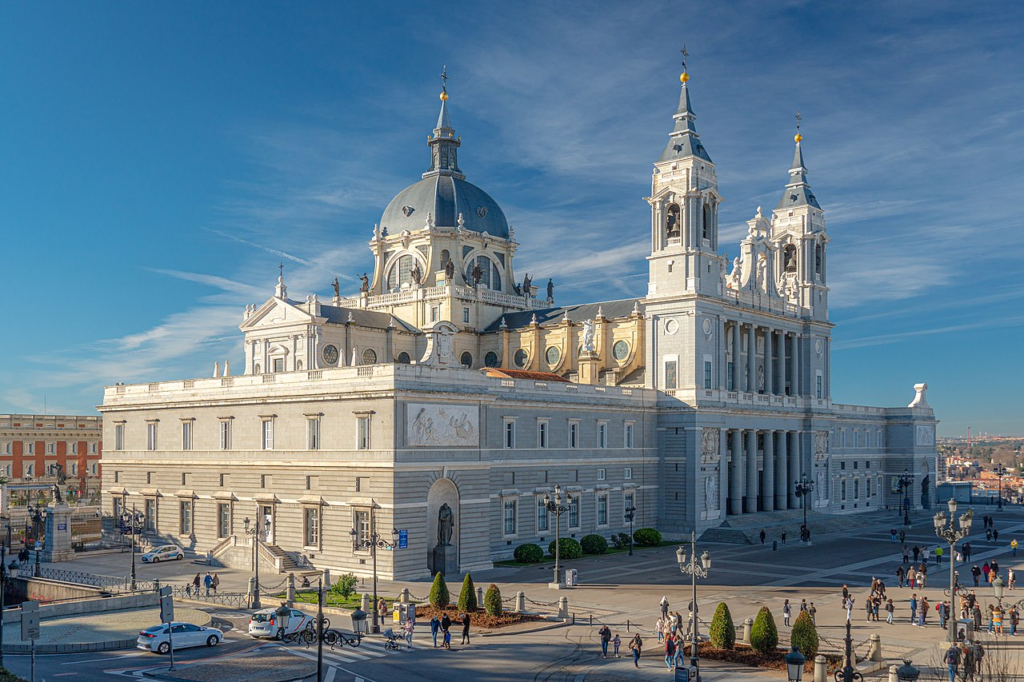
Entrando en el interés que a este artículo le concierne, el artístico, el último tercio del Siglo XIX se caracteriza por aunar tres estilos: Eclecticismo, Historicismo y el Hierro. La arquitectura de Hierro viene impregnada por ese afán industrial, por lo que son estructuras fundamentalmente ingenieriles. Se crean puentes, estaciones de ferrocarriles, mercados o los pabellones expositivos. Al contrario, el Historicismo es propio de esa búsqueda de la identidad nacional. En el caso de España, el estilo que imperó, por el que los artistas sintieron verdadera devoción, fue el medieval con el románico y el gótico; y el andalusí fijado por ese gusto islámico. Ejemplo de todo ello se encuentra en la Catedral de la Almudena (1826-1899), patrocinada por la propia reina María de las Mercedes al Marqués de Cubas.
Figura 1. Catedral de la Almudena, Marqués de Cuba (1826-1899), Madrid. Fuente.
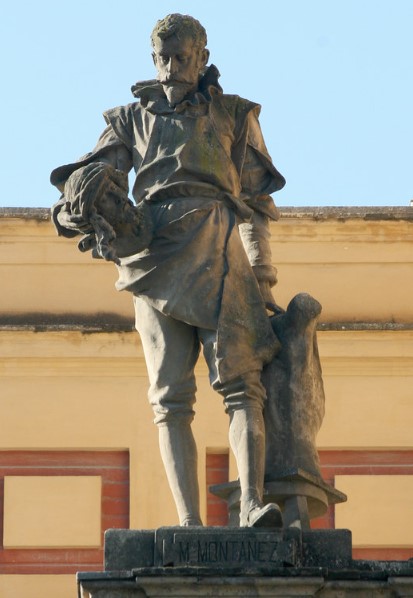
No hay que olvidar que todo estilo repercute en las distintas disciplinas artísticas. Por ende, la escultura también abrazó el Historicismo. Se rememora ese pasado glorioso con personajes o hechos ilustres llevando a cabo monumentos públicos como son los casos del Monumento a Ramón Pignatelli en Zaragoza (Lacarra, 2013) o la balaustrada del Palacio de San Telmo en el que se representan a los Doce Ilustres Sevillanos.
Figura 2. Escultura de Montañés, Galería de los Doce Ilustres de Sevilla, Palacio de San Telmo. Susillo (1895). Fuente.
Por supuesto, en la pintura se presenta una dicotomía transitoria entre la pintura realista y la historicista. La primera, al principio, aún presenta vestigios del romanticismo, del periodo isabelino, que va a ir abandonando para reforzarse en el realismo. Por consiguiente, la siguiente era una pintura academicista donde hay un gusto por la teatralidad y la veracidad de los hechos del pasado. Autores como Eduardo Cano o José Moreno Carbonero van a trabajar en esta tipología en la zona andaluza.
Para concluir, no hay que olvidar que el parámetro artístico de estos dos reyes es una continuación del segundo en base al primero. Con la diferencia que a la llegada de las influencias extranjeras de Europa, la tendencia al orientalismo o las nuevas técnicas arquitectónicas en relación a los materiales, suponen esa peculiaridad de lo que fue el reinado del «Pacificador» y la consiguiente regencia de su segunda esposa, María Cristina.
Bibliografía
Espadas M., Serrano Seco, C. y Villacorta, F. (1985). Alfonso XII y su época. Cuadernos de Historia, 16. Madrid, España.
Lacarra, Mª. (2013) Arte del siglo XIX. Zaragoza.
This translation was generated automatically using qwen2.5:14b-instruct and has not been reviewed by a human editor. It may contain errors, omissions or awkward phrasing — for the authoritative version, please read the original in Spanish. Found a mistake? Let us know at info@arqueotimes.es.
Following the outbreak of the Glorious Revolution in 1868, Isabella II was exiled to France along with all her offspring. There she would attempt to rekindle ties with the Dukes of Montpensier during the Christmas holidays of 1872, a time when the future king became smitten with his cousin Mercedes. Well-known are the numerous ballads, folk songs, or romances that permeate the love story of these two young people, which have even endured to this day thanks to the film «Where Are You Going, Alfonso XII?»(César Amadori, L. (Director).(1958). Where Are You Going, Alfonso XII? [Film]. Pecsa Films).
«Where are you going, Alfonso XII, / where are you going so sad? / I am going in search of Mercedes / for I did not see her yesterday evening».
Nevertheless, the Peacemaker ascended to the throne thanks to the Bourbon Restoration led by the Alfonsine cause that was spearheaded by Cánovas del Castillo. Two marriages, it is said that the first was out of love and the second purely a matter of state force, marked his reign along with victory over the Carlist Wars, among other matters. To all this must be added that Spain begins to embrace industrial innovations characteristic of the Industrial Revolution, which is compounded by social upheavals such as the Andalusian uprising. (M. Espadas, C. Seco Serrano and F. Villacorta, 1985:23).
Moving on to the artistic interest that pertains to this article, the last third of the 19th century is characterized by uniting three styles: Eclecticism, Historicism and Iron. The architecture of Iron is imbued with that industrial zeal, so they are structures fundamentally engineering-based. Bridges, railway stations, markets or exhibition pavilions are created. Conversely, Historicism is characteristic of that search for national identity. In the case of Spain, the style that prevailed and to which artists felt true devotion was medieval with Romanesque and Gothic; and Andalusian fixed by that taste for Islamic art. An example of all this can be found in the Cathedral of Almudena (1826-1899), sponsored by Queen Maria Mercedes to Marqués de Cubas.
Figure 1. Cathedral of Almudena, Marqués de Cuba (1826-1899), Madrid. Source.
It must not be forgotten that every style has repercussions in the various artistic disciplines. Consequently, sculpture also embraced Historicism. The glorious past is recalled with characters or illustrious events carried out in public monuments such as the case of the Monument to Ramón Pignatelli in Zaragoza (Lacarra, 2013) or the balustrade of Palacio de San Telmo where the Twelve Illustrious Sevillians are represented.
Figure 2. Sculpture by Montañés, Gallery of the Twelve Illustrious Sevillians, Palacio de San Telmo. Susillo (1895). Source.
Of course, in painting there is a transient dichotomy between realistic and historicist painting. The former, at first, still shows remnants of romanticism from the Isabelline period, which it will gradually abandon to strengthen itself in realism. Consequently, the latter was an academic style where there was a taste for theatricality and the veracity of past events. Authors like Eduardo Cano or José Moreno Carbonero worked on this type in the Andalusian region.
To conclude, it must not be forgotten that the artistic parameter of these two kings is a continuation of the second based on the first. With the difference that with the arrival of foreign influences from Europe, trends towards orientalism or new architectural techniques in relation to materials, represent that peculiarity of what was the reign of the «Pacificator» and the subsequent regency of his second wife, María Cristina.
Bibliography
Espadas M., Serrano Seco, C. and Villacorta, F. (1985). Alfonso XII and His Era. Historical Notes, 16. Madrid, Spain.
Lacarra, Mª. (2013) Nineteenth Century Art. Zaragoza.
Cañamero Gómez, A. (2023, 6 de marzo). El arte en el reinado de Isabel II y Alfonso XII (Parte II). ArqueoTimes. https://arqueotimes.com/articulos/el-arte-en-el-reinado-de-isabel-ii-y-alfonso-xii-parte-ii/





Comentarios