Victoria Eugenia Julia Ena de Battenberg, nació el 24 de octubre de 1887, en el castillo de Balmoral, en Aberdeenshire, Escocia. Fue hija del príncipe Enrique de Battenberg (1858-1896) y de la princesa Beatriz del Reino Unido (1857-1944), hija menor de la reina Victoria (1819-1901) (Noel, 1986, pp. 13-16). Se llamó Victoria en conmemoración de su abuela materna; Eugenia, en honor a su madrina, la emperatriz Eugenia de Montijo; Julia, en honor a su abuela paterna; y por último, Ena, un antiguo nombre celta escocés por el que era conocida por su familia. Conmemoraba el primer nacimiento de la realeza en Escocia desde el rey Carlos I en 1600 (Fisas, 1989, p. 240). Asimismo, fue el primer bebé nacido en Balmoral, siendo bautizada en este mismo castillo estando en brazos de la reina Victoria durante toda la ceremonia. Victoria Eugenia sería la segunda de cuatro hermanos: Alejandro (1886-1960), Leopoldo, (1889-1922), y Mauricio (1891-1914) (Noel, 1986, pp. 13-17).
Su nacimiento no fue fácil, describiéndolo la reina Victoria en su diario: «tras un tiempo terriblemente largo la criatura apareció para nuestra gran alegría y alivio, una niña grande y bonita, pero que casi había muerto al nacer» (Noel, 1986, p.15). Aquella noche se encendió una gran fogata en una de las cimas del paraje que rodea el castillo de Balmoral, Craig Gowan, en señal de triunfo por el feliz acontecimiento. La infancia de Victoria Eugenia transcurrió junto con sus hermanos, padres y su abuela, en una atmósfera permanente de una corte real, con ministros, cortesanos y funcionarios (Noel, 1986, pp. 15-19).
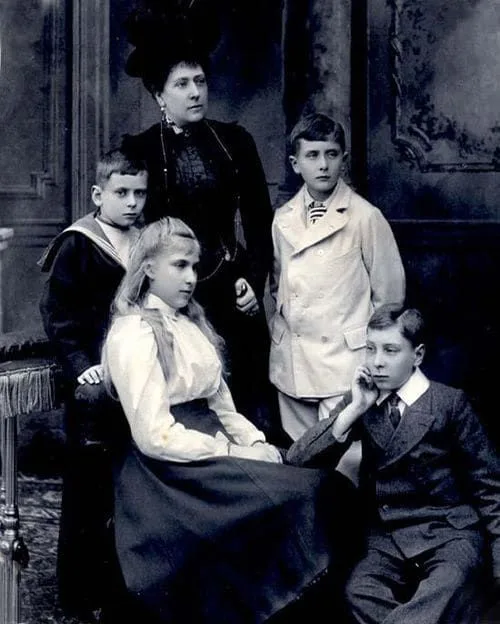
Figura 1. La princesa Victoria Eugenia de Battemberg (sentada), junto con su madre, la princesa Beatriz, y sus hermanos, Alejandro, Leopoldo y Mauricio. Fuente. Licencia: Dominio Público.
En 1905, Alfonso XIII de España (1886-1956) comenzó su viaje para buscar una esposa apta para ser la futura reina de España. Tenía veinte años, y en una ocasión diría: «Me casaré con una princesa que me guste y con nadie más. Quiero amar a mi mujer» (Noel, 1986, p. 55). El rey se había fijado en la joven princesa británica, Patricia de Connaught. Pero en su visita a Inglaterra su propuesta de matrimonio fue rechazada por dicha princesa. No obstante, sus afectos se trasladaron rápidamente a la prima de esta, Victoria Eugenia. En una comida ofrecida en Buckingham, se fijó en la bella joven, preguntando: «¿Quién es esa muchacha con el pelo casi blanco?». Victoria Eugenia creía que la había tomado por albina, y se ruborizó avergonzada (Gómez Santos, 1964, p. 39). El joven rey español se acercó a hablar con ella después de la comida. Tras su visita a Inglaterra comenzó a cortejar a la joven princesa Victoria Eugenia (Noel, 1986, pp. 58-67). Para la futura reina de España, el joven monarca le pareció: «muy delgado, muy meridional, muy alegre, muy encantador. No era apuesto entonces, aunque mejoró mucho en este sentido más adelante» (Noel, 1986, p. 68).
La boda se produjo el 31 de mayo de 1906, en la Iglesia de los Jerónimos, de Madrid. Los días previos a la boda se recibieron mensajes anónimos que amenazaban con atentar en la boda real (Gómez Santos, 1964, pp. 113-122). Las amenazas se cumplieron. Tras la ceremonia de boda, los coches y carruajes de la comitiva real se dirigieron hacia Palacio. A su paso por la calle Mayor 88, el anarquista Mateo Morral lanzó una bomba dentro de un ramo de flores ocasionando más de cien heridos y veintitrés muertos (Noel, 1986, pp. 109-119).
Victoria Eugenia y Alfonso XIII tuvieron siete hijos: Alfonso, príncipe de Asturias (1907-1938); Jaime, duque de Segovia (1908-1975); Beatriz (1909-2002); Fernando (1910); María Cristina (1911-1996); Juan, conde de Barcelona (1913-1993), y Gonzalo (1914-1934). Alfonso XIII fue informado de la posibilidad de que su descendencia podría portar la enfermedad de la hemofilia, pero ignoró estas advertencias, puesto que aseguró que esa desgracia no aparecería en su familia. No fue así: Alfonso, príncipe de Asturias, y Gonzalo, sufrieron esta enfermedad. Por otro lado, Jaime nació sordo. Asimismo, la reina Victoria Eugenia sufrió en silencio las continuas infidelidades de su marido (Calderón Berrocal, 2013, pp. 127-130).
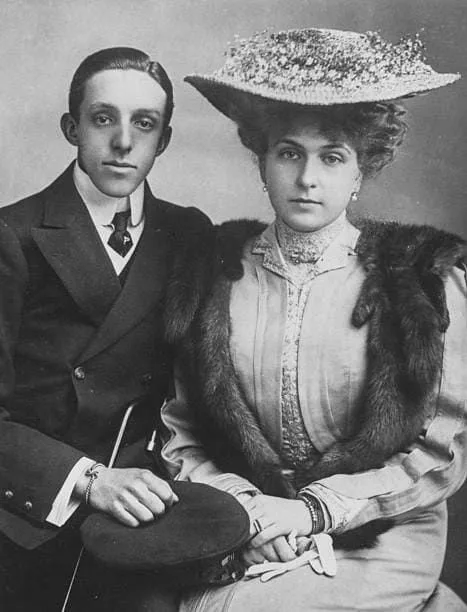
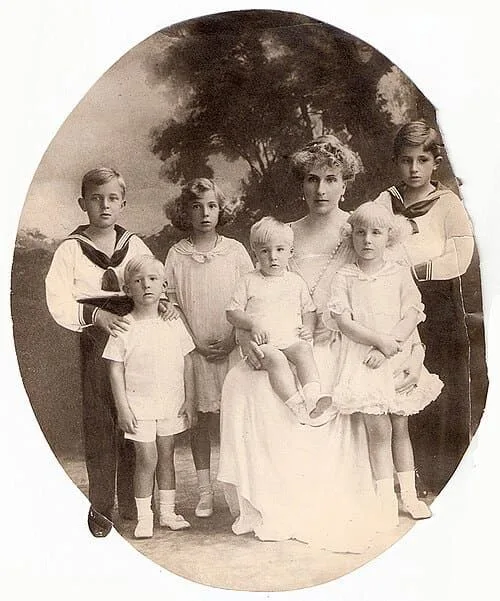
Portrait of King Alfonso XIII and Queen Victoria Eugenie of Spain, in a picture taken by Mullins of Ryde, in April 1906. (Photo by Keystone/Hulton Archive/Getty Images)Figura 2. a) El rey Alfonso XIII de España y la princesa Victoria Eugenia de Battenberg, en abril de 1906 (un mes antes de su boda). Fuente. Licencia: Dominio Público. b) La reina de España, Victoria Eugenia, junto con sus seis hijos. Fuente. Licencia: Dominio Público.
La reina comenzó a enfocar su vida en ayudar y mejorar las condiciones de los enfermos y necesitados. El nivel de atención médica, en su mayoría, era muy bajo. Todavía peor el nivel de las enfermeras, quienes pertenecían a órdenes religiosas, con un enfoque arcaico en la medicina. La reina visitó los barrios más pobres de Madrid, creando e impulsando diversas organizaciones benéficas: una rama española de la Cruz Roja, una Liga contra el cáncer, otra contra la tuberculosis, el Instituto para la Reeducación de Inválidos y las casas cuna, entre muchas otras (Fisas, 1989, p. 251). La formación de la sociedad de la Cruz Roja en 1916, bajo la dirección personal de la reina, fue un hito, puesto que a partir de ese momento todo el sistema médico comenzaría a mejorar. El trabajo que la reina realizó durante la Primera Guerra Mundial con la Cruz Roja la ayudó a soportar la soledad y sensación de aislamiento que sufría en la corte española y en su matrimonio (Noel, 1986, pp. 172-177).
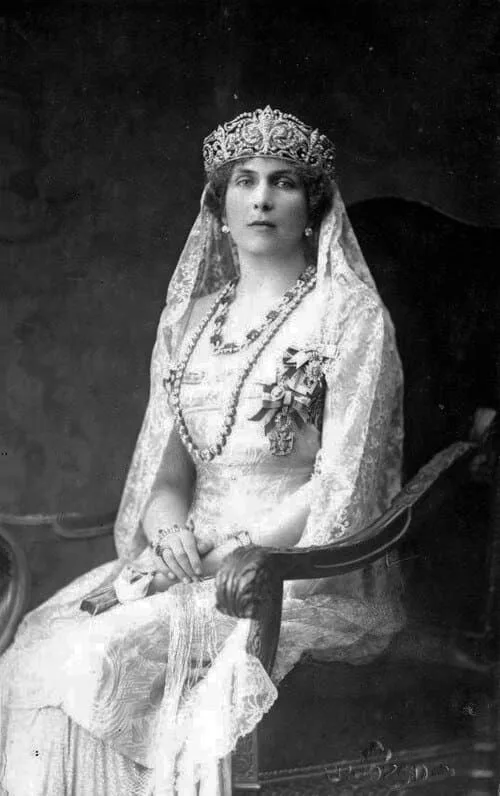
Figura 3. La reina de España, Victoria Eugenia, en 1922. Fuente. Licencia: Dominio Público.
En 1931, tras años convulsos, la monarquía abandonaría España. Victoria Eugenia salió sola de España con cinco de sus hijos, debido a que Alfonso se había marchado solo (Noel, 1986, p. 249). Durante el exilio los reyes se separaron. A partir de 1948, Victoria Eugenia fija su residencia definitiva en el palacete Vieille Fontaine en Lausana (Suiza). Fue en esta residencia donde celebró la pedida de mano de su nieto Juan Carlos de Borbón con la princesa Sofía de Grecia. Volvería a España en 1968, tras treinta y siete años en el exilio, para ser madrina del bautizo de su bisnieto, el actual rey Felipe VI. En su vuelta a España la reina creyó que España la había olvidado exclamando: «Han pasado tantos años… ¡Seguro que ya nadie me recuerda!» (Calderón Berrocal, 2013, p. 166). Había sido admirada por su belleza, pero criticada por su frialdad (Fisas, 1989, p. 250). Sin embargo, España no se había olvidado de ella y fue recibida con gran entusiasmo (Calderón Berrocal, 2013, 166). En palabras de la propia Victoria Eugenia: «Yo hice cuanto pude y puse de mi parte todo para agradar a los españoles» (Obregón, p. 1969). Los recuerdos de la infanta Margarita sobre su abuela son inolvidables:
La adorábamos. Nos conocía a todos como la palma de su mano. A todos nos trataba igual. Prefería hablarnos en español y no en inglés… en ocasiones nos sentíamos más inclinados a abrirle a ella nuestros corazones que a nuestros padres… amaba nuestras visitas (Noel, 1986, p. 297).
Estar con sus catorce nietos fue el mayor interés de la vida de la reina desde la década de 1940. Esperaba que encontraran un futuro lleno de promesas, distinto a su desilusionante vida (Noel, 1986, pp. 298-299). En sus últimos años de vida la reina recordaba la muerte de sus hijos Alfonso y Gonzalo, exclamando: «Las cargas del Estado, la dificultad de vivir con el rey, cuyas faltas eran tan extremadas, no eran nada comparadas con mi dolor al perder dos hijos. El amor rara vez muere de golpe, especialmente el amor maternal» (Noel, 1986, p. 299).
El 15 de abril de 1969 falleció en Lausana. Su hijo Juan cubrió el cuerpo de su madre con el manto de la Virgen del Pilar, patrona de España. Fue embalsamada y enterrada con la bata azul que le había regalado su nieta, la infanta Pilar. Su cabeza estaba cubierta por una mantilla de encaje blanco (Noel, 1986, p. 330). Sus restos serían trasladados a España en 1985, donde descansan en el Monasterio de San Lorenzo del Escorial, junto con los de sus hijos y Alfonso XIII (Calderón Berrocal, 2013, pp. 160-171).
En conclusión, la joven princesa Victoria Eugenia de Battemberg se convirtió en reina de España por amor, con un reinado marcado por la tristeza de un matrimonio con un marido ausente y desleal, la rigidez dentro de la corte española y el fallecimiento de sus hijos. Dedicó su tiempo a la caridad y a su familia en el exilio, creyendo que sería una reina olvidada.
Bibliografía
Noel, G. (1986). Victoria Eugenia. Reina de España. Javier Vergara Editor.
Gómez Santos, M. (1964). La Reina Victoria Eugenia, de cerca. Afrodísio Aguado.
Calderón Berrocal, Mª del Carmen. (2013). Apuntes sobre Victoria Eugenia de Battemberg, reina de España. Tabularium, 1(10), 109-179.
Fisas, C. (1989). Historias de las reinas de España (casa de Borbón). Planeta.
This translation was generated automatically using qwen2.5:14b-instruct and has not been reviewed by a human editor. It may contain errors, omissions or awkward phrasing — for the authoritative version, please read the original in Spanish. Found a mistake? Let us know at info@arqueotimes.es.
Victoria Eugenie Julia Ena of Battenberg, born on October 24, 1887, in Balmoral Castle, Aberdeenshire, Scotland. She was the daughter of Prince Henry of Battenberg (1858-1896) and Princess Beatrice of the United Kingdom (1857-1944), the youngest daughter of Queen Victoria (1819-1901) (Noel, 1986, pp. 13-16). She was named Victoria in honor of her maternal grandmother; Eugenie, after her godmother, Empress Eugénie de Montijo; Julia, in honor of her paternal grandmother; and lastly, Ena, an ancient Scottish Celtic name by which she was known to her family. It marked the first royal birth in Scotland since King Charles I in 1600 (Fisas, 1989, p. 240). Additionally, it was the first baby born at Balmoral and she was baptized in this castle while Queen Victoria held her throughout the ceremony. Victoria Eugenie would be the second of four siblings: Alexander (1886-1960), Leopoldo (1889-1922), and Maurice (1891-1914) (Noel, 1986, pp. 13-17).
Her birth was not easy; Queen Victoria described it in her diary: «after a terribly long time the child appeared to our great joy and relief, a large and beautiful girl but who had almost died at birth» (Noel, 1986, p.15). That night, a huge bonfire was lit on one of the peaks surrounding Balmoral Castle, Craig Gowan, as a sign of triumph for this happy event. Victoria Eugenie's childhood passed alongside her siblings, parents and grandmother in an atmosphere of constant royal court life with ministers, courtiers, and officials (Noel, 1986, pp. 15-19).
Figure 1. Princess Victoria Eugenie of Battenberg (seated), with her mother, Princess Beatrice, and her brothers Alexander, Leopoldo, and Maurice. Source. License: Public Domain.
In 1905, Alfonso XIII of Spain (1886-1956) began his journey to find a suitable wife for the future queen of Spain. He was twenty years old and once said: «I will marry a princess that I like and no one else. I want to love my wife» (Noel, 1986, p. 55). The king had set his sights on the young British princess, Patricia of Connaught. However, during his visit to England, his proposal was rejected by this princess. Nevertheless, his affections quickly turned to her cousin, Victoria Eugenie. At a dinner at Buckingham Palace, he noticed the beautiful young woman and asked: «Who is that girl with almost white hair?» Victoria Eugenie believed he had mistaken her for an albino and blushed in embarrassment (Gómez Santos, 1964, p. 39). The young Spanish king approached to speak with her after the dinner. After his visit to England, he began courting the young princess Victoria Eugenie (Noel, 1986, pp. 58-67). For the future queen of Spain, the young monarch seemed: «very thin, very southern, very cheerful, very charming. He was not handsome then, although he improved greatly in this regard later» (Noel, 1986, p. 68).
The wedding took place on May 31, 1906, at the Church of Jerónimos, Madrid. The days leading up to the wedding saw anonymous messages threatening an attack during the royal wedding (Gómez Santos, 1964, pp. 113-122). These threats were carried out. After the wedding ceremony, the royal procession's carriages headed towards the palace. As they passed by Calle Mayor 88, anarchist Mateo Morral threw a bomb inside a bouquet of flowers causing over one hundred injuries and twenty-three deaths (Noel, 1986, pp. 109-119).
Victoria Eugenie and Alfonso XIII had seven children: Alfonso, Prince of Asturias (1907-1938); Jaime, Duke of Segovia (1908-1975); Beatriz (1909-2002); Fernando (1910); María Cristina (1911-1996); Juan, Count of Barcelona (1913-1993), and Gonzalo (1914-1934). Alfonso XIII was informed that his descendants might carry the disease hemophilia but ignored these warnings as he assured this misfortune would not appear in his family. It did: Alfonso, Prince of Asturias, and Gonzalo suffered from it. On the other hand, Jaime was born deaf. Additionally, Queen Victoria Eugenie silently endured her husband's continuous infidelities (Calderón Berrocal, 2013, pp. 127-130).
Portrait of King Alfonso XIII and Queen Victoria Eugenie of Spain, taken by Mullins of Ryde in April 1906. (Photo by Keystone/Hulton Archive/Getty Images)Figure 2. a) King Alfonso XIII of Spain and Princess Victoria Eugenie of Battenberg in April 1906 (one month before their wedding). Source. License: Public Domain. b) Queen of Spain, Victoria Eugenie, with her six children. Source. License: Public Domain.
The queen began to focus her life on helping and improving the conditions of the sick and needy. The level of medical care was, for the most part, very low. Even worse were the levels of nursing staff who belonged to religious orders with an archaic approach to medicine. The queen visited the poorest neighborhoods in Madrid, creating and promoting various charitable organizations: a Spanish branch of the Red Cross, a league against cancer, another against tuberculosis, the Institute for the Rehabilitation of Invalids, and crèches, among many others (Fisas, 1989, p. 251). The formation of the Red Cross society in 1916 under the personal direction of the queen was a milestone as from that moment on, the entire medical system began to improve. The work she did during World War I with the Red Cross helped her cope with the loneliness and sense of isolation she felt at the Spanish court and in her marriage (Noel, 1986, pp. 172-177).
Figure 3. Queen of Spain Victoria Eugenie in 1922. Source. License: Public Domain.
In 1931, after years of turmoil, the monarchy left Spain. Victoria Eugenie left Spain alone with five of her children as Alfonso had already departed (Noel, 1986, p. 249). During exile, the king and queen separated. From 1948 onwards, Victoria Eugenie settled permanently in Vieille Fontaine Palace in Lausanne (Switzerland). It was here that she celebrated her grandson Juan Carlos de Borbón's engagement to Princess Sofia of Greece. She returned to Spain in 1968 after thirty-seven years in exile to be godmother at the baptism of her great-grandson, the current King Felipe VI. Upon returning to Spain, the queen believed Spain had forgotten her exclaiming: «So many years have passed... Surely no one remembers me now!» (Calderón Berrocal, 2013, p. 166). She was admired for her beauty but criticized for her coldness (Fisas, 1989, p. 250). However, Spain had not forgotten her and she was received with great enthusiasm (Calderón Berrocal, 2013, 166). In the words of Infanta Margarita: «We adored her. She knew all of us as well as the palm of her hand. She treated us all equally. She preferred to speak to us in Spanish and not English... on occasion we felt more inclined to open our hearts to her than to our parents... she loved our visits» (Noel, 1986, p. 297).
Being with her fourteen grandchildren was the greatest interest of the queen's life since the 1940s. She hoped they would find a future full of promise, unlike her disappointing life (Noel, 1986, pp. 298-299). In her final years, she recalled the deaths of her sons Alfonso and Gonzalo, exclaiming: «The burdens of state, the difficulty of living with a king whose faults were so extreme, were nothing compared to my pain at losing two children. Love rarely dies suddenly, especially maternal love» (Noel, 1986, p. 299).
On April 15, 1969, she died in Lausanne. Her son Juan covered his mother's body with the mantle of Our Lady of Pilar, patroness of Spain. She was embalmed and buried in a blue robe that her granddaughter Infanta Pilar had given to her. Her head was covered by a white lace mantilla (Noel, 1986, p. 330). Her remains were transferred to Spain in 1985 where they rest at the Monastery of San Lorenzo de El Escorial alongside those of her children and Alfonso XIII (Calderón Berrocal, 2013, pp. 160-171).
In conclusion, the young Princess Victoria Eugenie of Battenberg became Queen of Spain out of love, with a reign marked by sadness from a marriage to an absent and unfaithful husband, rigidity within the Spanish court, and the loss of her children. She dedicated her time to charity and her family in exile, believing she would be a forgotten queen.
Bibliography
Noel, G. (1986). Victoria Eugenie: Queen of Spain. Javier Vergara Editor.
Gómez Santos, M. (1964). The Queen Victoria Eugenia Up Close. Afrodísio Aguado.
Calderón Berrocal, Mª del Carmen. (2013). Notes on Victoria Eugenie of Battenberg, Queen of Spain. Tabularium, 1(10), 109-179.
Fisas, C. (1989). The Stories of the Queens of Spain (House of Bourbon). Planeta.
Baz Vevia, M. V. (2025, 22 de diciembre). Victoria Eugenia de Battemberg: la olvidada reina de España. ArqueoTimes. https://arqueotimes.com/articulos/victoria-eugenia-de-battemberg-la-olvidada-reina-de-espana/




Comentarios